Source Citation & Market Context: This analysis evaluates market developments originally covered by CoinDesk, expanded with interbank liquidity metrics, institutional order flow analysis, and corporate communication strategies compiled by NexcoinPR.
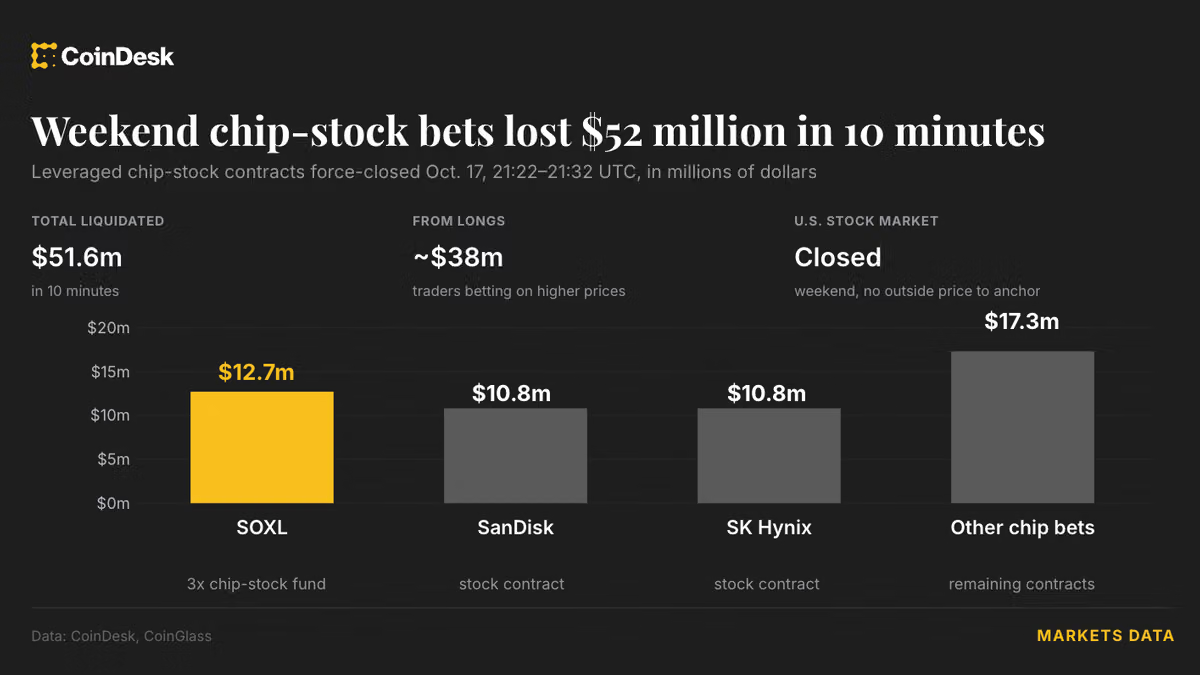
Quick Market Takeaway: A 10-minute flush hit round-the-clock chip-stock contracts while U.S. markets were shut, leaving traders with no real share price to lean on.
Macro Drivers and Market Catalyst Evaluation
Global financial liquidity continues to react with heightened sensitivity toward interest rate projections, central bank communications, and cross-border capital rotations. Market participants observing the latest developments reported by CoinDesk note that macro data points are driving rapid repositioning across institutional portfolios. When sovereign bond yields advance and risk premiums recalibrate across global exchanges, digital asset valuations experience immediate repricing pressures.
As sovereign bond yields adjust and inflation readings prompt revised forward guidance, asset managers are evaluating duration risk and collateral quality with renewed discipline. The relationship between traditional fixed income securities and digital assets remains a primary focus for institutional risk committees. Portfolio managers are balancing macro headwinds against secular adoption trends, leading to defensive asset reallocations during periods of heightened volatility.
Key Market Levels and Primary Indicators
- Primary Asset Focus: Macro volatility drivers reported by CoinDesk establishing directional price structure.
- Yield and Liquidity Differential: Benchmark sovereign yields and interest rate expectations steering institutional capital flow.
- Derivatives Positioning: Options skew and basis spreads reflecting measured risk mitigation across desks.
- Institutional Flow Profile: Balanced OTC settlement volumes and prime brokerage allocations maintaining steady liquidity depth.
Order Book Depth and Derivatives Market Structure
Order book analysis reveals consolidated liquidity bands around key psychological price barriers. Spot volumes indicate that trading desks are defending established support ranges while testing higher resistance blocks. High-frequency execution algorithms continue to dictate short-term order flow, capitalizing on structural spread variations between tier-one exchanges and over-the-counter liquidity pools.
Momentum indicators show balanced positioning, though implied volatility skew suggests traders are actively securing downside hedging protection. Market depth across major trading pairs highlights disciplined participation from institutional market makers. When spot liquidity thins out during non-peak trading windows, sudden shifts in derivative funding rates can trigger localized liquidation cascades, clearing out over-used long and short speculative positions.
Professional market makers emphasize the necessity of maintaining resilient spread buffers and automated risk controls to prevent adverse execution slippage during high-velocity trading sessions. As institutional market architecture matures, liquidity fragmentation is gradually diminishing, giving rise to tighter spreads and deeper book depth across centralized and decentralized venues.
Institutional Sentiment and Capital Allocation Dynamics
Custodial metrics and on-chain settlement volumes underscore steady capital retention among long-term market participants. Rather than aggressive directional speculation, prime brokers report elevated client demand for basis trading, structured yield harvesting, and delta-neutral arbitrage. This maturity reflects a transitioning market regime where institutional infrastructure plays a central role in stabilizing broader market sentiment.
Treasury management desks and family offices are prioritizing counterparty safety and regulatory compliance above speculative yields. By deploying capital through regulated custodial trusts and prime brokerage accounts, large allocators can participate in liquidity cycles while mitigating operational risks. Such disciplined capital deployment provides structural support during broader market corrections.
Furthermore, quantitative trading funds continue to monitor macro correlations closely. As cross-asset linkages strengthen between foreign exchange volatility, sovereign fixed income benchmarks, and digital token performance, institutional trading teams deploy multi-asset algorithmic models designed to capture fleeting market inefficiencies without taking concentrated directional exposure.
Corporate Communications and Public Relations Advisory
In periods of intense market fluctuations and heightened regulatory observation, clear and proactive corporate communications become essential for digital asset foundations, crypto exchanges, and fintech protocols. Maintaining transparent public disclosures regarding balance sheet safety, operational resilience, and technical milestones protects stakeholder trust and mitigates misinformation.
Firms seeking to elevate their announcements can access specialized crypto PR agency solutions designed to reach institutional allocators and retail audiences alike. Connecting with journalists through a verified global press release distribution network ensures market updates receive credible, widespread visibility across tier-one financial news outlets.
Frequently Asked Questions
What factors triggered the recent volatility across digital asset markets?
The recent market movement was primarily driven by changing macroeconomic expectations, rising sovereign debt yields, and shifting interest rate projections. When fixed income yields climb, institutional investors frequently reduce exposure to higher-beta assets to lock in risk-free sovereign returns, impacting overall liquidity across cryptocurrency markets.
How do institutional trading desks manage downside liquidity risk?
Institutional desks use options hedging strategies, delta-neutral basis trades, and automated execution algorithms to minimize price slippage and protect capital. By maintaining strict position limits and monitoring over-the-counter order books, trading firms preserve market stability even during sudden price swings.
Market Outlook and Final Perspective
Digital currency markets continue to exhibit heightened correlation with global macroeconomic trends and sovereign monetary policy. As institutional participants expand their operational footprint, the market environment is becoming increasingly disciplined. Continued focus on verifiable liquidity, regulatory adherence, and institutional-grade infrastructure will remain the dominant theme guiding market direction in upcoming quarters.
NexcoinPR Disclaimer
NexcoinPR provides independent editorial analysis and financial public relations distribution services. Market analysis published on this site is intended solely for educational and informational purposes and does not constitute investment advice, legal guidance, or financial solicitation. Digital assets and foreign exchange instruments carry market and technical risks.